
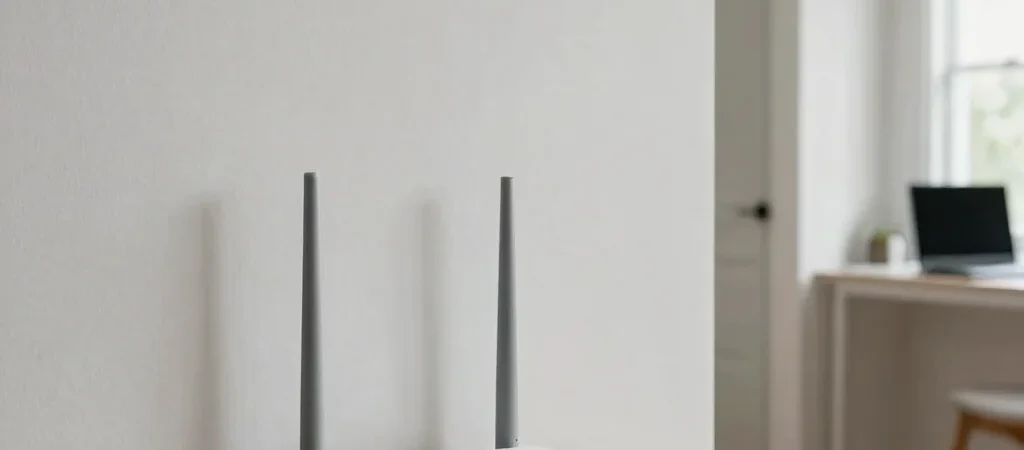
Your phone shows full Wi-Fi bars in the living room, then the video call freezes as soon as you walk down the hall. That difference usually means the signal is struggling to reach that room, even if the internet service itself is working normally. Before changing your plan or replacing the router, look at where the signal has to travel.
Where the signal gets lost
Wi-Fi travels through walls and furniture, but some materials block more of it than others. A router tucked inside a cabinet, set on the floor, or placed behind a television has a tougher job than one out in the open and closer to the center of the home. Concrete, brick, and metal can be especially challenging obstacles.
Other devices and nearby networks can also contribute to a crowded connection, particularly in apartments where many routers are close together. The result can feel inconsistent: a webpage loads, but a video stutters when several devices are using the network at once. That pattern is useful evidence, not proof that the router is failing.
Try placement before upgrades
Move the router into an open, raised position and test the room again from the same spot. Avoid hiding it among electronics or placing it beside a large metal object. If the router has separate network names for different Wi-Fi bands, try both: one may reach farther, while another may offer more speed at closer range.
If one room remains unreliable, a mesh system or access point can extend coverage, but where you put it matters. A mesh node needs a usable signal from the main router; placing it inside the dead zone may simply pass along a weak connection. Test the location between the router and the problem room first.
Read the pattern, not just bars
Check whether the slowdown happens on one device or several, and whether it changes when you move closer to the router. If every device struggles throughout the home, the issue may be with the router or internet service rather than a single room. Start with one placement change and one repeat test—that is a clearer diagnosis than guessing from the signal icon.